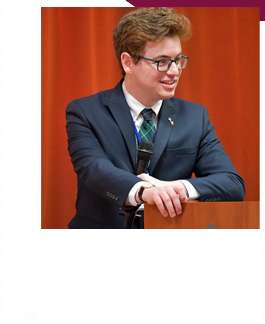
Biography:
Dr Duncan V. Mifsud is an experimental astrochemist with a research focus on the physical and chemical processes that result from the interaction of ionizing radiation with ices in difference space environments (e.g., the interstellar medium, outer Solar System moons, comets, trans-Neptunian objects). Hailing from the small mediterranean island of Malta, he read for a BSc (Hons) in Chemistry at the University of Malta, graduating in 2018 with First Class Honors (Summa cum Laude). He was subsequently awarded an 'Endeavour Scholarship' by the Government of the Republic of Malta that enabled him to pursue an MSc in Geochemistry at the University of St Andrews, which he obtained in 2019 with a Distinction Grade (Summa cum Laude).
In 2020, Duncan moved to the University of Kent on a 'Vice-Chancellor's Research Scholarship' to read for a PhD in Physics (Experimental Astrochemistry) under the supervision of Prof. Nigel J. Mason, OBE. Following the conclusion of his PhD in 2023, Duncan began a postdoctoral research position at the HUN-REN Institute for Nuclear Research (ATOMKI) in Debrecen, Hungary (where he had previously worked as a visiting postgraduate student) under the mentorship of Drs Béla Sulik and Zoltán Juhász. In the summer of 2025, he came to NASA Ames Research Center to work as a postdoctoral researcher with Drs Michel Nuevo and Scott A. Sandford.
Duncan performs laboratory experiments utilizing ultrahigh-vacuum set-ups and cryogenically cooled sample holders that allow him to prepare astrophysical molecular ice analogs that mimic real ices known to populate the interstellar medium and outer Solar System. Because these space environments are rich in radiation (e.g., galactic cosmic rays, stellar winds, giant planetary magnetospheric plasmas, ultraviolet and x-ray fields), the radiolysis of these ices that initially contain simple molecules such as water, ammonia, carbon monoxide, and hydrogen sulfide may result in the synthesis of larger, more complex (and possibly biologically relevant) molecules even at low temperature. Astrophysical ice analogs prepared in the laboratory are therefore subjected to irradiation using a combination of ultraviolet lamps, electron guns, and particle accelerators, and the ensuing physical and chemical changes are monitored using a combination of infrared spectroscopy and mass spectrometry.
Duncan has been awarded several prizes for his research, including a number of 'Best PhD Thesis' awards, the University of Kent's 'Prize for Postgraduate Research Champion', and the prestigious 'Róbert Bárány Prize' – Hungary's national prize for young researchers.
Duncan Mifsud's major publications can be found on the Astrochemistry Laboratory's Publications Pages.
|